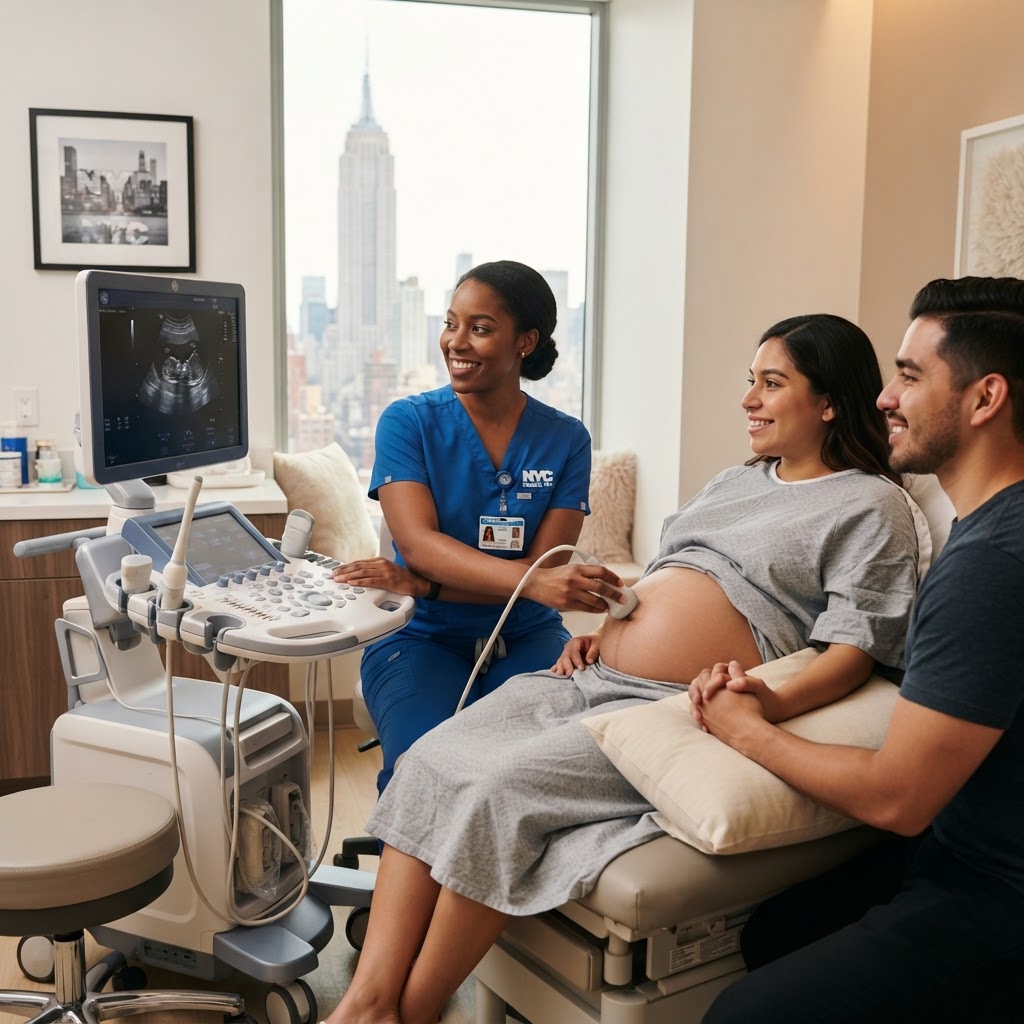
When most people hear the word ultrasound, the first image that comes to mind is often an expectant parent catching a first glimpse of their baby. While prenatal care is a vital use of this technology, ultrasound—also known as sonography—is a versatile and essential tool in the world of primary care.
At LocalMD, we believe that understanding your diagnostic options is the first step toward taking control of your health. Whether you are visiting us at our Sunset Park, Brooklyn location or our clinic in Maspeth, Queens, our team is dedicated to providing clear, compassionate care. In this guide, we’ll explore how ultrasound technology works, why it is used, and what you can expect when your primary care provider recommends one.
How Does an Ultrasound Work?
Unlike X-rays or CT scans, which use ionizing radiation to create images, ultrasounds utilize high-frequency sound waves. These waves are so high-pitched that the human ear cannot hear them. During the procedure, a small handheld device called a transducer sends these sound waves into the body.
As the sound waves hit different tissues, organs, and fluids, they bounce back (or "echo") to the transducer. A computer then translates these echoes into real-time images or videos on a monitor. Because ultrasounds capture images in real-time, they are particularly effective for showing the movement of internal organs and the flow of blood through vessels.
One of the greatest benefits of ultrasound technology is its safety profile. Because there is no radiation involved, it is the preferred imaging method for pregnant patients and is considered highly safe for children and sensitive internal organs.
Beyond Pregnancy: Common Uses for Ultrasound in Primary Care
While ultrasounds are synonymous with obstetrics, primary care physicians use them to investigate a wide variety of symptoms and monitor various health conditions. If you are experiencing unexplained pain, swelling, or infection, an ultrasound may be the key to finding answers.
Common diagnostic uses include:
- Abdominal Imaging: This is used to examine the liver, gallbladder, spleen, pancreas, and kidneys. It can help detect gallstones, kidney stones, or liver disease.
- Thyroid Checks: If a physician at LocalMD feels a lump in your neck or suspects a thyroid imbalance, an ultrasound can help visualize the gland to check for nodules or cysts.
- Cardiovascular Health: A specialized type of ultrasound called a Doppler ultrasound allows providers to see and evaluate blood flow through arteries and veins in the arms, legs, and neck. This is crucial for detecting blood clots (DVT) or monitoring narrowed blood vessels.
- Pelvic Health: Beyond pregnancy, pelvic ultrasounds are used to monitor the health of the uterus and ovaries, helping to diagnose conditions like uterine fibroids or ovarian cysts.
- Musculoskeletal Exams: Ultrasounds can help diagnose problems with soft tissues, such as tendons, ligaments, and muscles. This is often useful for patients in Sunset Park or Maspeth who may have sports injuries or age-related joint pain.
What to Expect During Your Ultrasound Appointment
Preparing for a medical test can sometimes feel overwhelming, but an ultrasound is generally a straightforward, non-invasive, and painless experience. Most sessions last between 30 and 60 minutes.
Before the Appointment
Depending on the area being imaged, your provider may give you specific instructions. For an abdominal ultrasound, you might be asked to fast (not eat or drink) for several hours beforehand to ensure clear images of your gallbladder and digestive system. Conversely, for a pelvic ultrasound, you might be asked to drink several glasses of water so your bladder is full, which helps provide a clearer "window" to see pelvic organs.
During the Procedure
You will typically be asked to lie down on a comfortable examination table. A trained technician (sonographer) will apply a warm, water-based gel to the skin over the area being examined. This gel is essential because sound waves travel poorly through air; the gel creates a secure bond between the transducer and your skin. The sonographer will then move the transducer firmly against your body to capture the necessary images.
After the Procedure
Once the imaging is complete, the gel is wiped off, and you can immediately return to your normal daily activities. There is no downtime or recovery period required.
Why Quality Imaging Matters for NYC Families
In a bustling city like New York, convenience and continuity of care are paramount. When you receive a referral for diagnostic imaging, having a primary care team that understands your full medical history is invaluable.
At LocalMD, we pride ourselves on being a community-oriented practice. Our locations in Sunset Park, Brooklyn and Maspeth, Queens are designed to serve our neighbors with state-of-the-art care in a welcoming environment. By integrating diagnostic discussions into your primary care visits, we ensure that your results aren't just numbers on a page, but a part of a comprehensive plan for your long-term wellness.
Our providers take the time to explain why a test is being ordered and what the results mean for your health. Whether we are monitoring a chronic condition or investigating a new symptom, our goal is to provide the clarity you need to move forward with confidence.
Conclusion: Taking the Next Step in Your Health Journey
Ultrasounds are a powerful, safe, and effective tool that helps modern medicine see "under the hood" without the need for surgery or radiation. If your doctor has recommended an ultrasound, remember that it is a proactive step toward maintaining your health and catching potential issues early.
Please note: This blog post is for informational purposes only and does not constitute medical advice. Every patient's needs are unique. Always consult with a qualified healthcare professional to discuss your symptoms and determine the best diagnostic path for you.
Are you due for a check-up, or do you have concerns that may require diagnostic imaging? The team at LocalMD is here to help. With convenient locations in Sunset Park, Brooklyn and Maspeth, Queens, we make it easy for NYC families to access high-quality primary care.
Ready to prioritize your health? Book an appointment with a LocalMD provider today at our Sunset Park or Maspeth office.